

Starting a side hustle is exciting for about a week. Then the questions show up. Is this allowed by my job? Do I need a license? How much do I save for taxes? Why did I earn $300 and only have $90 to show for it? A side hustle starter checklist heads off most of those before they start.
Most of those problems are easy to prevent if you set things up before the first paying customer, not after.
This checklist covers the setup, a 30-day plan to go from idea to first job, the money rules that keep more of what you earn, and a tracker so tax time is never a surprise.
Is this side hustle right for you? 9 questions
Before you commit your evenings, check the idea against these nine questions. Six or more checks? Give it a try.
- Time: It fits your real weekly schedule.
- Startup cost: You can start with what you have.
- Skills: You can do it well right now.
- Demand: People near you already pay for it.
- Enjoyment: You won’t dread it by week three.
- Travel: Drive time won’t eat your earnings.
- Rules: It’s allowed by your job, lease, or HOA.
- Repeat work: Customers could hire you again.
- Low risk: There’s little to lose if you stop.
A good fit matters more than the flashiest idea.
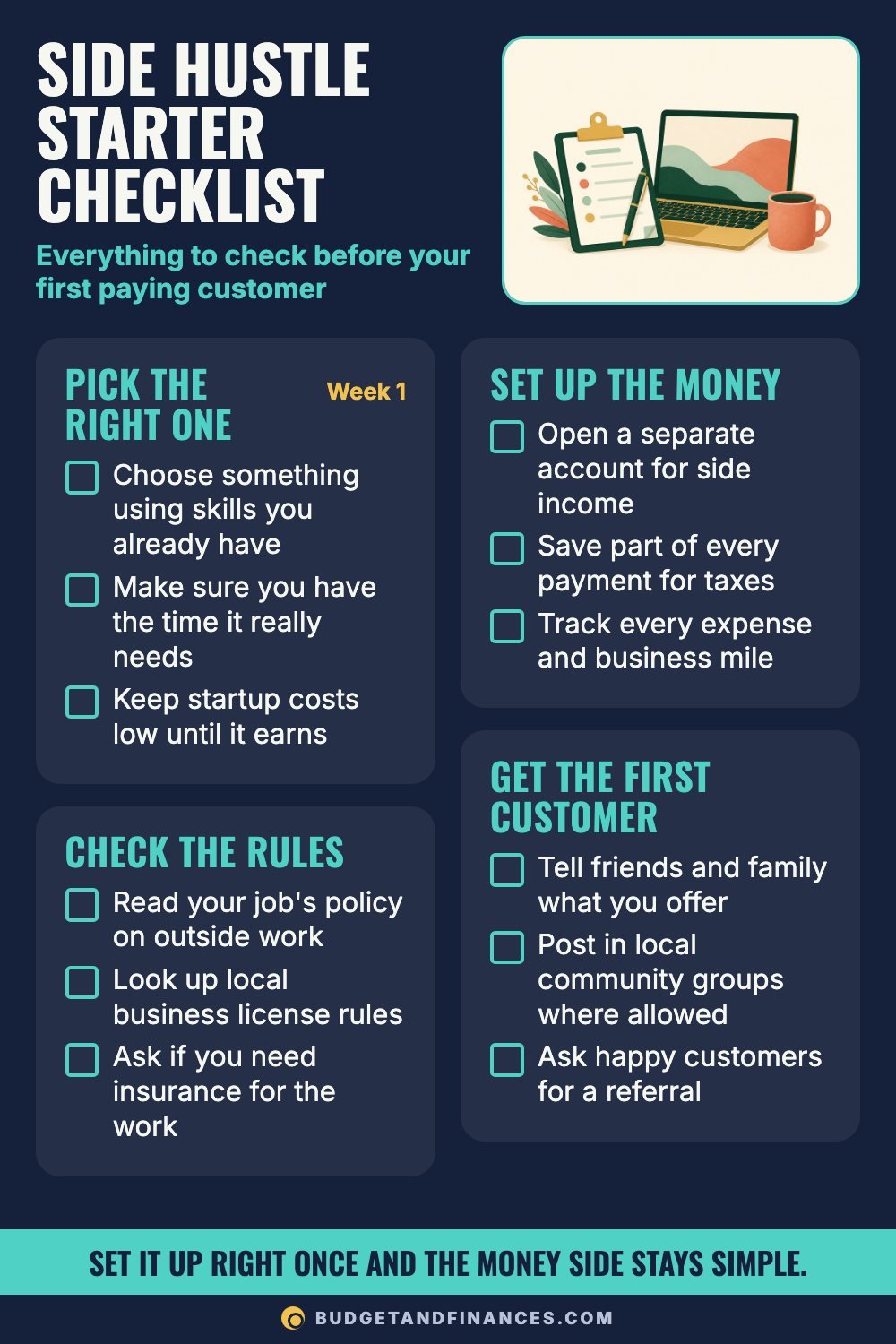
The side hustle starter checklist
Pick the right one (week 1)
- Choose something using skills you already have. Learning a new skill and finding customers at the same time is twice the work.
- Make sure you have the time it really needs. Count travel, messages, and setup, not just the work itself.
- Keep startup costs low until it earns. Use what you own. Buy better tools once the income proves it’s worth it.
Check the rules
- Read your job’s policy on outside work. Some employers limit side work, especially in the same field or with their clients.
- Look up local business license rules. Your city or county website usually explains what’s needed. Some kinds of work, like home childcare, home food sales, and certain repairs, have their own state rules.
- Ask if you need insurance for the work. A homeowners or renters policy may not cover business activity. Pet care, childcare, and working in other people’s homes are worth asking about.
Set up the money
- Open a separate account for side income. It shows you what the side hustle really earns.
- Save part of every payment for taxes. Side income is usually taxable.
- Track every expense and business mile. Keep receipts from the first day.
Get the first customer
- Tell friends and family what you offer. Be specific about the service and the price.
- Post in local community groups where allowed. Read each group’s rules first.
- Ask happy customers for a referral. Right after a job goes well is the best time.
Your first 30 days, week by week
Thirty days is enough to learn if it’s worth your time.
Week 1: Pick and price
- Choose one service or product to start. One is easier to explain and easier to get good at.
- See what others nearby charge for it. Check local listings and community groups so your price fits your area.
Week 2: Set up simply
- Open a separate account for the money.
- Make a simple flyer or post. Say what you do, where, when, your price, and how to reach you.
Week 3: Get the first yes
- Tell 20 people you know what you offer. A direct message to each person works better than one vague post.
- Offer a small first job to earn reviews, like a single walk, one room cleaned, or one tutoring session.
Week 4: Review and adjust
- Add up your hours, earnings, and costs.
- Decide: keep going, change the price, or switch to a different idea.
Money rules for a new side hustle
Treat it like a business from the very first dollar.
Keep the money separate
A separate account shows you what the side hustle really earns, without mixing it with groceries and bills.
Save for taxes every time
Side income is usually taxable. Move a share of each payment the day you get it, before it feels like spending money.
Track costs as you go
Keep receipts and log business miles. Some costs may lower your taxable income, so a record is worth keeping even if you’re not sure yet.
Be wary of pay-to-join
Walk away from gigs that charge you for a starter kit or training to get work. Real work pays you. It doesn’t ask you to pay first.
Know your real hourly rate
Subtract costs from what you earned, then divide by all hours, including driving and messages.
Spend profit, not sales
Only what’s left after costs and taxes is money you can use.
Ask a tax pro if unsure
Rules on estimated taxes and deductions depend on your situation and where you live. A short conversation in your first year can save a lot of stress.
Worked example: one month of side hustle money
Here’s how the math works for an example month. These numbers are examples only. What you earn will depend on your work, area, and hours.
- Earned: $600
- Costs: $80 in supplies and gas
- Tax savings: 25% of each payment, so 25% of $600 = $150
- Hours: 32, including driving and messages
Money you can actually use: $600 − $80 − $150 = $370.
Real hourly rate before taxes: ($600 − $80) ÷ 32 hours = $16.25 an hour.
After setting aside for taxes: $370 ÷ 32 hours = about $11.56 an hour.
That last number is the one to compare with other options. If it feels too low for the time, week 4 is when you raise the price, cut the drive time, or try something else.
The 25% is an example cushion. Your real tax bill depends on your total income and local rules, so check with a tax professional if you’re unsure.
Free printable: starter checklist and income tracker
The printable includes the starter checklist from this post and a side hustle income tracker. The tracker has spaces for the month, your monthly goal, and your tax savings percentage, plus 14 rows with columns for Date, Client/job, Earned, Costs, and Set aside.
Track it monthly so tax time is never a surprise.
Common mistakes
Spending every payment as it comes in. If you haven’t set aside for taxes and costs, the money isn’t really yours yet.
Skipping the rules check. A job policy, lease, or HOA rule can end a side hustle you’ve already invested in.
Mixing side income with personal money. You won’t know whether the side hustle is worth it.
Counting only work hours. Driving, messages, and setup are part of the job.
Paying for a starter kit or training to get work. That’s a common warning sign of a scam.
FAQ
What do I need before starting a side hustle?
Check your job’s outside work policy and local license rules, open a separate account, plan to save part of each payment for taxes, and track expenses from day one.
How much should I set aside for side hustle taxes?
It depends on your total income and where you live. Some people use a set percentage, like the 25% in the example, as a cushion. A tax professional can help you pick the right amount.
Do I need a business license for a side hustle?
Sometimes. It depends on your city, county, state, and the type of work. Check your local government’s website or call the business licensing office.
How do I know if my side hustle is worth it?
After 30 days, add up hours, earnings, and costs, and figure out your real hourly rate. Then decide whether to keep going, change the price, or switch.
This is general education, not personal financial advice.