When money is tight, the advice to “just start a side hustle” can feel useless. Start what? With what time? And with what money, when the whole problem is not having enough?
The good news is that many side hustles need very little to start. They use skills you already have, like looking after kids, cleaning, organizing, or knowing your way around a thrift store.
This guide covers nine ideas and how to start each one, how to match an idea to your skills and your schedule, online versus local options, and what to do with the money once it comes in. What you earn depends on your area, your time, and your rates, so treat any numbers here as examples.
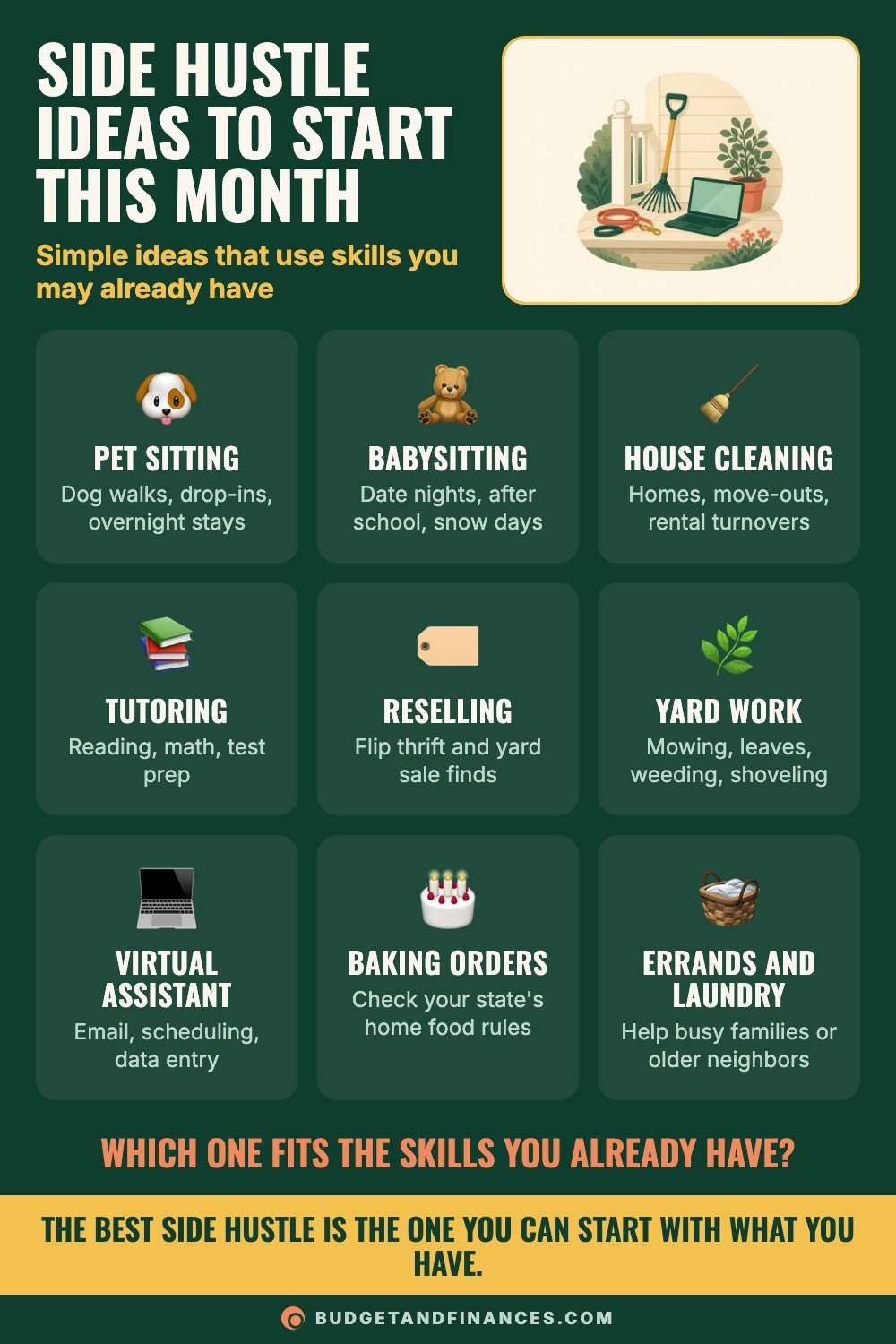
9 side hustle ideas and how to start each one
1. Pet sitting
Dog walks, drop-in visits, and overnight stays. Start with neighbors, friends, and coworkers who travel or work long days. Do a meet-and-greet with each pet first, and write down feeding, medication, and emergency vet details.
2. Babysitting
Date nights, after school, and snow days. Tell parents you know, and consider taking a first aid and CPR course, which many parents look for. Agree on your rate, hours, and house rules before the first job.
3. House cleaning
Regular homes, move-outs, and rental turnovers. Start with one or two clients and a simple checklist so every clean is consistent. Decide whether you bring supplies, and if you do, count them as a cost.
4. Tutoring
Reading, math, and test prep. Start with subjects you know well and ages you’re comfortable with. Local parents, school community groups, and online tutoring are all places to find students.
5. Reselling
Buy underpriced items at thrift stores and yard sales, clean them up, and resell them. Start with a category you already know, like kids’ clothes, furniture, or tools. Look up what similar items have actually sold for before you buy.
6. Yard work
Mowing, leaves, weeding, and shoveling. Much of it is seasonal, which works well if you want extra money at certain times of year. Start with equipment you already own.
7. Virtual assistant work
Email, scheduling, and data entry for small business owners. Start by listing the admin tasks you already do well, and offer them to a small business you know. Be careful with anyone asking you to pay for training or a starter kit to get work.
8. Baking orders
Cookies, bread, and celebration treats. Check your state’s home food rules first. Many states have cottage food laws that spell out what you can sell from a home kitchen, where, and with what labels.
9. Errands and laundry
Grocery pickup, pharmacy runs, and laundry for busy families or older neighbors. Start with people who already trust you, and agree on how you’ll handle their money and receipts.
Side hustles by what you’re good at
You don’t need a new skill to start. Match the idea to one you already use.
- Good with kids: babysitting, tutoring, after-school pickup, or helping at kids’ parties.
- Love animals: dog walking, pet sitting, and drop-in visits while owners work or travel.
- Super organized: closet and pantry organizing, virtual assistant work, or bookkeeping once you have training.
- Handy: furniture assembly, moving help, or small repairs where local rules allow. Some repair work needs a license, so check before you offer it.
- Good with words: proofreading, resume help, product descriptions, or social media posts for small businesses.
- Great at thrifting: buy underpriced items at yard sales, clean them up, and resell them.
- Love to bake: cookies or bread for neighbors. Check your state’s cottage food rules first.
Side hustles by how much time you have
Match the hustle to your calendar, not the other way around.
A few hours a week (evenings)
- Proofreading or resume help
- Selling things you already own
- Tutoring one or two students online
Weekends only
- Yard work and seasonal cleanups
- Babysitting for date nights
- Furniture assembly or moving help
Flexible weekdays
- Dog walking during work hours
- House cleaning
- Running errands for older neighbors
Seasonal
- Holiday gift wrapping or baking orders
- Snow shoveling and leaf raking
- Helping out at parties and events
Be honest about the hours you really have. A side hustle that eats every free evening tends to get dropped by the second month.
Online vs local side hustles
Online: work from anywhere
- Tutoring, virtual assistant work, and writing
- No driving or gas costs
- You compete with people everywhere
- It can take longer to land a first client
Local: often quicker to start
- Pet sitting, cleaning, yard work, and babysitting
- Word of mouth spreads fast nearby
- Travel time and gas cut into earnings
- Happy neighbors refer other neighbors
Start with what fits your schedule and the skills you have now. Try one, give it a month, then decide.
What to do with side hustle money
Extra income only helps if it has a job to do. Without a plan, it slips into everyday spending and you can’t point to what it changed.
Here’s an example split for a month when a side hustle brings in $500. Your amounts will differ.
| Category | Share | Amount | What it’s for |
|---|---|---|---|
| Set aside for taxes | 25% | $125 | Side income is usually taxable. Save for tax time |
| Business costs | 10% | $50 | Supplies, gas, fees, and what you need to keep going |
| Your main goal | 50% | $250 | Debt payoff, emergency fund, or a savings goal |
| Fun money | 15% | $75 | A small reward so the extra work feels worth it |
| Total | 100% | $500 |
A note on taxes
Side income is usually taxable, even when it’s paid in cash and even if you don’t receive a tax form for it. Self-employment income can also mean extra taxes on top of regular income tax, and some people need to make estimated tax payments during the year.
The 25% in the example is a cushion you choose. There’s no official percentage for it. The right amount depends on your total income and where you live. Check your local rules or ask a tax professional, especially in your first year.
Worked example: one idea, checked with real math
Say you’re good with animals and have flexible weekday mornings. Dog walking fits both.
Using example numbers only: you walk dogs for 5 walks a week at an example rate of $20 a walk. That’s 5 × $20 = $100 a week before taxes and costs.
Now count all the time. Each walk takes 30 minutes, plus 15 minutes of driving and 5 minutes of messages. That’s 50 minutes per walk, so about 4 hours and 10 minutes a week for $100.
In a month with 5 weeks of walks, that’s 5 × $100 = $500, and the table above shows where it goes: $125 set aside for taxes, $50 for gas and supplies, $250 toward your main goal, and $75 to enjoy.
Rates vary widely by area. Check what others near you charge before you set yours.
Common mistakes
Picking the idea that sounds best instead of the one you can start. The best side hustle is the one you can start with what you have.
Forgetting about taxes. Spending every dollar as it comes in can leave you with a bill you didn’t plan for.
Ignoring drive time. Local gigs can look well paid until you count the driving.
Paying to get work. Walk away from any gig that asks you to buy a kit or training before you can earn.
Skipping the rules. Home baking, childcare, and some repair work have state or local rules. Your lease, HOA, or employer may have rules too.
FAQ
What side hustle can I start with no money?
Pet sitting, babysitting, tutoring, errands, and selling things you already own need little or no money to begin.
How much can I make from a side hustle?
It depends on the work, your area, your rates, and how many hours you put in. Any figures you see online, including the examples here, are examples and not promises.
Do I have to pay taxes on side hustle income?
Side income is usually taxable. Rules depend on where you live and your total income, so check your local rules or talk to a tax professional.
Should I choose an online or local side hustle?
Local work is often quicker to start through word of mouth. Online work skips the drive but has more competition. Pick the one that fits your schedule.
How do I find my first side hustle customer?
Tell friends, family, and neighbors exactly what you offer and your rate. Post in local community groups where it’s allowed, and ask happy customers for referrals.
This is general education, not personal financial advice.