
It’s 6pm, nobody has decided what’s for dinner, and the fridge is full of ingredients that don’t make a meal. That’s usually when takeout happens instead of meal planning.
A meal plan fixes that moment. It also shrinks your grocery bill, because you buy what the week needs instead of what looks good in the store.
This is a simple system you can do in about 30 minutes a week. You’ll get the five steps, cheap theme nights that cut down on decisions, building blocks for easy meals, and a leftover plan that stretches every trip.
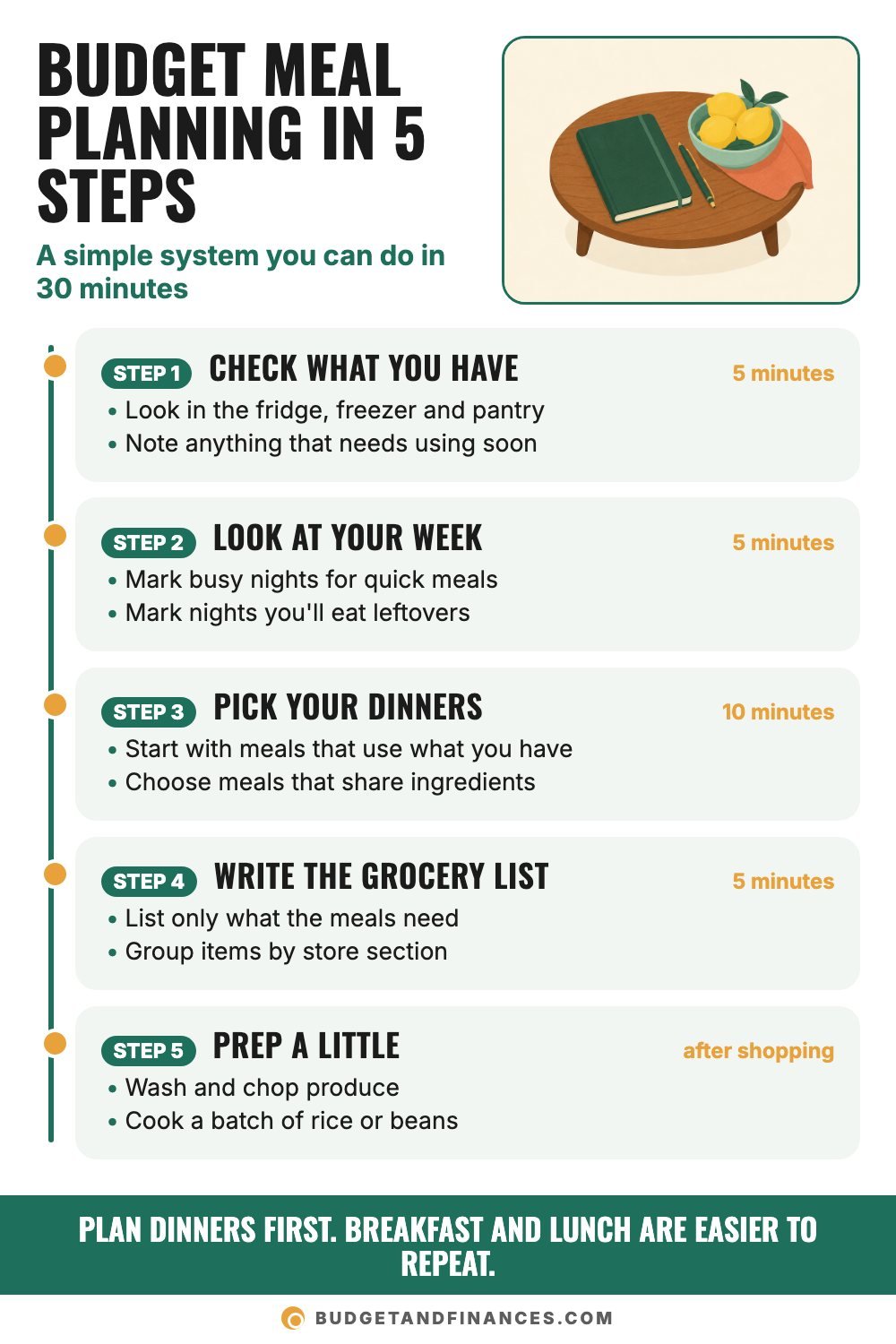
The 5-step budget meal planning system
Plan dinners first. Breakfast and lunch are easier to repeat, so they can be the same few meals most weeks.
Step 1: Check what you have (5 minutes)
- Look in the fridge, freezer and pantry.
- Note anything that needs using soon, like half a bag of spinach or chicken that’s been in the freezer a while.
Those items go into the plan first. Food you already bought is the cheapest food you have.
Step 2: Look at your week (5 minutes)
- Mark busy nights for quick meals.
- Mark nights you’ll eat leftovers.
A plan that ignores soccer practice and late shifts falls apart by Wednesday. Match the meal to the night.
Step 3: Pick your dinners (10 minutes)
- Start with meals that use what you have.
- Choose meals that share ingredients.
If taco night uses half a head of cabbage, put the other half in the rice bowls later in the week. Shared ingredients mean less waste and a shorter list.
Step 4: Write the grocery list (5 minutes)
- List only what the meals need.
- Group items by store section.
Grouping by section keeps you moving through the store and away from the aisles you don’t need.
Step 5: Prep a little (after shopping)
- Wash and chop produce.
- Cook a batch of rice or beans.
Even 20 minutes of prep makes the busy nights easier, which makes takeout less tempting.
Use cheap theme nights
A theme per night means fewer decisions and less takeout. You aren’t choosing from every recipe in the world, only from what fits “soup night.” Pick seven from these nine:
- Taco night: beans, rice, cabbage and salsa.
- Pasta night: pasta with sauce and a frozen vegetable.
- Soup night: lentil, vegetable or bean soup.
- Breakfast for dinner: eggs, toast and potatoes.
- Baked potato bar: toppings from the fridge.
- Rice bowl night: rice, an egg, vegetables and sauce.
- Homemade pizza: simple dough and leftover toppings.
- Soup and sandwich: grilled cheese and tomato soup.
- Leftover night: clear the fridge before you shop again.
Keep leftover night on the plan every week. It’s the night that keeps food from going in the trash.
Build meals from four blocks
Stuck for ideas? Pick one from each group and dinner’s done.
Base
- Rice
- Pasta
- Potatoes
- Tortillas
- Oats
Protein
- Eggs
- Dried or canned beans
- Lentils
- Chicken thighs
- Ground meat stretched with beans
Vegetables
- Frozen mixed vegetables
- Cabbage
- Carrots
- Onions
- Canned tomatoes
Flavor
- Garlic and onion powder
- Chili powder and cumin
- Soy sauce
- Salsa
- Lemon juice or vinegar
A few combinations: rice, eggs, frozen vegetables and soy sauce is a quick fried rice. Tortillas, beans, cabbage and salsa is taco night. Potatoes, ground meat stretched with beans, onions and chili powder makes a hearty skillet.
Most of these keep a long time in the pantry or freezer, so you can buy them when you’re already at the store and always have a backup dinner.
Make leftovers stretch the plan
Leftovers are a meal you already paid for. Here’s how to use them on purpose.
- Cook double on purpose. Make twice the chili or soup and freeze half for a busy night.
- Plan a second meal. Roast chicken becomes tacos. Extra rice becomes fried rice the next day.
- Pack lunch at dinner. Portion leftovers into lunch containers before the food goes in the fridge.
- Label and date. Write what it is and the date so nothing gets lost in the freezer.
- Schedule leftover night. Put one leftover night on the plan so food gets eaten, not tossed.
- Freeze single portions. Small portions thaw faster and make easy lunches later.
For food safety, get leftovers into the fridge within 2 hours of cooking, and eat refrigerated leftovers within 3 to 4 days. If you won’t get to them in time, freeze them.
Worked example: one week on a $600 monthly grocery budget
Say your household spends $600 a month on groceries. First, turn that into a weekly number. A month is a bit longer than four weeks, so multiply by 12 and divide by 52:
$600 × 12 = $7,200 a year. $7,200 ÷ 52 = about $138.46 a week.
Round down to $138 and write it in the “Grocery budget” box on the planner.
The time
The five steps take 5 + 5 + 10 + 5 = 25 minutes, plus a little prep after shopping. That’s where “about 30 minutes a week” comes from.
The plan
Here’s a sample week of dinners using the theme nights and building blocks. It assumes rice, dried beans, oats and spices are already in the pantry from Step 1.
| Day | Dinner | Need to buy |
|---|---|---|
| Sun | Soup night: lentil soup (cook double) | Lentils, carrots, onions |
| Mon | Taco night | Tortillas, cabbage, salsa |
| Tue | Leftover lentil soup | Nothing |
| Wed | Rice bowl night | Eggs |
| Thu | Breakfast for dinner | Potatoes, bread |
| Fri | Homemade pizza | Flour, cheese |
| Sat | Leftover night | Nothing |
Two of the seven dinners need nothing new. Cabbage from Monday can go into Wednesday’s rice bowls, and eggs work for both Wednesday and Thursday.
The spending check
Say the receipt comes to $121.40. Write it in the “Spent” box. $138 − $121.40 = $16.60 left for the week.
That $16.60 can cover a midweek milk run, or roll into next week. The number is from this sample receipt. Yours will depend on your household and prices, so log your real total each week.
Get the free Weekly Budget Meal Planner
The planner has boxes for the week, your grocery budget and what you spent, then a row for each day with columns for breakfast, lunch, dinner and what you need to buy. Put it on the fridge. A plan on the fridge beats a great idea at 6pm.
Common mistakes
Planning meals before checking the fridge. You’ll buy things you already have. Step 1 always comes first.
Planning seven new recipes. New recipes take longer and need more ingredients. Stick mostly to meals you know, and try one new one a week.
Ignoring your schedule. A slow-cooked meal on your busiest night won’t happen. Save quick meals for busy nights.
No leftover night. Without one, leftovers pile up and get tossed at the end of the week.
Dividing the monthly grocery budget by four. It gives you a weekly number that’s too high. Use monthly × 12 ÷ 52.
FAQ
How do I start meal planning on a budget?
Check what you have, look at your week, pick dinners that use what you have and share ingredients, write a list, then prep a little after shopping. Start with dinners only.
How long does meal planning take?
About 30 minutes a week once you’re used to it. The five steps add up to 25 minutes, plus some prep after shopping.
What are cheap meals to put on a meal plan?
Tacos with beans and rice, lentil or bean soup, pasta with a frozen vegetable, breakfast for dinner, baked potatoes and rice bowls are all built from inexpensive staples.
How long do leftovers last?
Refrigerated leftovers are generally safe for 3 to 4 days. Freeze anything you won’t eat in that time, and label it with the date.
Should I plan breakfast and lunch too?
Plan dinners first. Breakfast and lunch are easier to repeat, so pick a few simple options and rotate them. Packing dinner leftovers for lunch covers several days on its own.