It’s 5:30, everyone is hungry, and the fridge looks empty of pantry staples. That’s usually the moment takeout wins.
A stocked pantry changes that. When you keep a short list of cheap basics on hand, dinner is always possible, even on the night before payday.
This guide gives you the nine staples worth keeping, the meals each one makes, seven dinners you can cook without a special trip, and a simple inventory so you stop buying doubles.
The 9 cheap pantry staples worth keeping
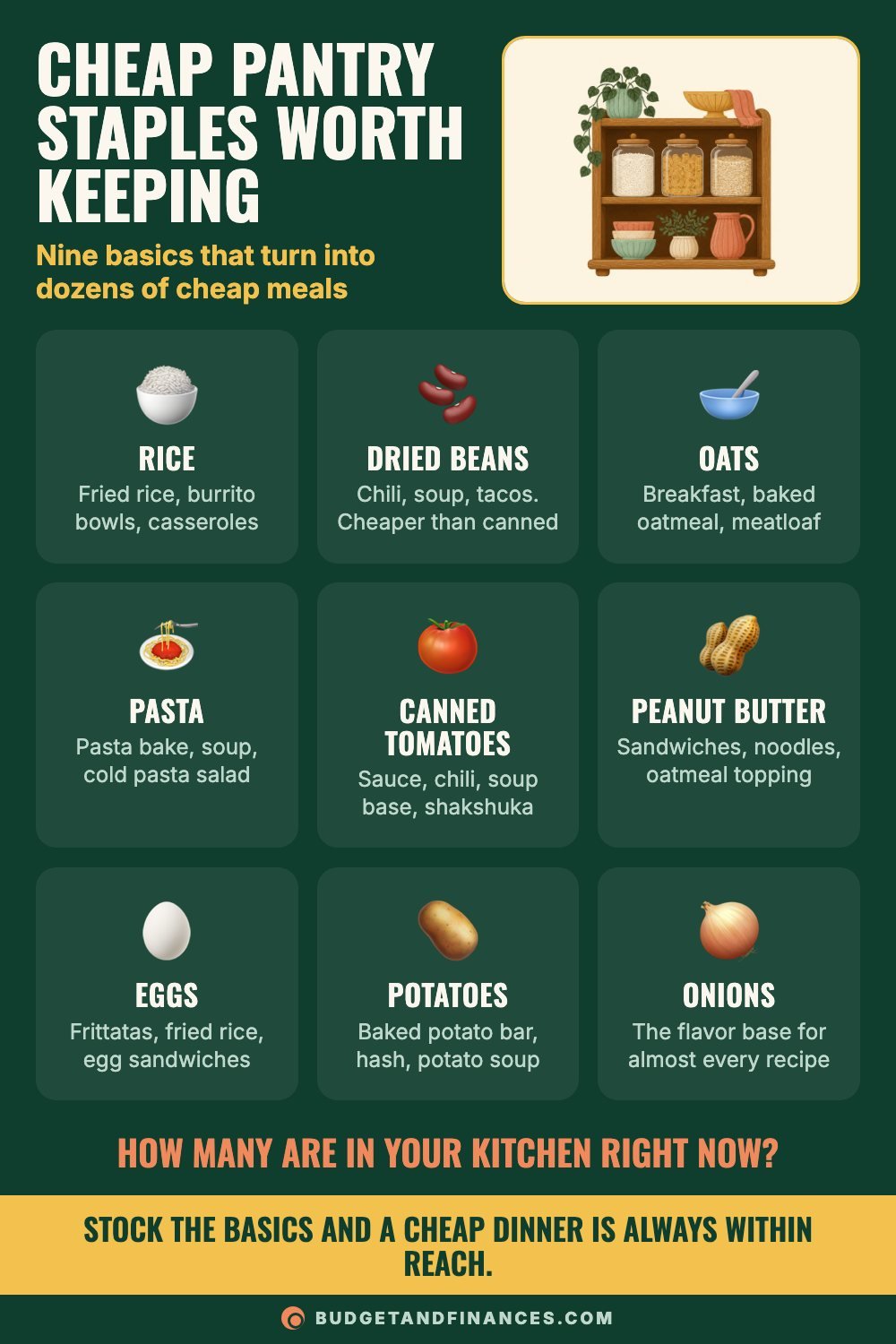
These are the backbone of budget cooking. Each one works in several meals, keeps well, and costs little per serving.
1. Rice
Fried rice, burrito bowls, casseroles, rice and beans, and a filling side for almost any dinner. Long grain white rice keeps the longest. Cook extra and use the leftovers for fried rice the next day.
2. Dried beans
Chili, soup, and tacos. Dried beans usually cost less per serving than canned. Soak them overnight, or use lentils when you forget, since lentils cook in about half an hour with no soaking.
3. Oats
Breakfast, baked oatmeal, and a binder for meatloaf or meatballs in place of breadcrumbs. Rolled oats are the most flexible.
4. Pasta
Pasta bake, soup, and cold pasta salad. Keep two shapes, one long and one short, so you can cover both sauces and bakes.
5. Canned tomatoes
Sauce, chili, soup base, and shakshuka (eggs poached in a spiced tomato sauce). Diced and crushed cover nearly every recipe.
6. Peanut butter
Sandwiches, peanut noodles, and an oatmeal topping that keeps kids full until lunch.
7. Eggs
Frittatas, fried rice, and egg sandwiches. Eggs are one of the fastest cheap proteins you can cook.
8. Potatoes
A baked potato bar, breakfast hash, and potato soup. Store them somewhere cool and dark, away from onions, so they last longer.
9. Onions
The flavor base for almost every recipe on this page. One onion makes plain beans or plain rice taste like a real meal.
How many are in your kitchen right now? If you have six or more, you can already make most of the dinners below.
The full pantry staples shopping list
The nine basics above are the core. This longer list rounds out a budget kitchen so you only need to top up fresh food each week.
Grains and starches (buy the big bag of what you eat weekly)
– Long grain rice
– Pasta in two shapes
– Rolled oats
– Flour and cornmeal
– Potatoes
Proteins
– Dried beans and lentils
– Eggs
– Peanut butter
– Canned tuna or chicken
Canned and jarred
– Diced and crushed tomatoes
– Canned corn and green beans
– Chicken or vegetable broth
– Salsa
Flavor builders
– Onions and garlic
– Salt, pepper, chili powder, cumin
– Soy sauce
– Cooking oil and vinegar
Freezer
– Frozen mixed vegetables
– Frozen spinach or broccoli
– Frozen fruit for oatmeal
Frozen vegetables deserve a special mention. They’re picked and frozen, so they don’t go limp in the crisper drawer, and you use only what you need.
7 cheap dinners from pantry staples
No special shopping trip needed. Each one uses the same basic ingredients in a different way.
1. Rice and beans
Cook rice. Warm black or pinto beans in a pan with a chopped onion and a teaspoon of cumin. Serve the beans over the rice with salsa on top.
2. Pasta with tomato sauce
Soften chopped onion and garlic in a little oil. Add a can of crushed tomatoes and a pinch of chili flakes, simmer 15 minutes, and toss with pasta.
3. Lentil soup
Cook onion in a pot, then add lentils, broth, and a can of diced tomatoes. Simmer until the lentils are soft. Stir in frozen spinach at the end.
4. Egg fried rice
Use leftover rice, since cold rice fries better than fresh. Scramble eggs in the pan, add the rice and frozen vegetables, and finish with soy sauce.
5. Baked potato bar
Bake potatoes and set out toppings: warm beans, salsa, and any cheese or vegetables you already have. Everyone builds their own.
6. Peanut noodles
Whisk peanut butter with soy sauce, a splash of vinegar, and a little hot water. Toss with cooked pasta and frozen broccoli.
7. Bean chili
Cook onion with chili powder, then add two kinds of beans and canned tomatoes. Simmer until thick. It freezes well, so make a double batch.
A simple weekly plan using those dinners
Here’s one way to line up the week so leftovers get used instead of tossed:
- Monday: Bean chili (make a double batch, freeze half)
- Tuesday: Rice and beans (cook extra rice)
- Wednesday: Egg fried rice with Tuesday’s leftover rice
- Thursday: Pasta with tomato sauce
- Friday: Baked potato bar with leftover chili as a topping
- Saturday: Lentil soup
- Sunday: Peanut noodles
Breakfast can be oats most days, with frozen fruit or peanut butter on top. Lunches can be leftovers or egg sandwiches.
Stock up or skip: which pantry staples to buy in bulk
Bulk buying only saves money when you use it all. A deal you throw away is money in the trash.
Stock up on:
– Rice, oats, and pasta you eat every week
– Dried beans and lentils
– Canned tomatoes and broth
– Frozen vegetables
– Staples on sale that you already use
Skip or buy small:
– Giant jars of spices you rarely use, since ground spices lose flavor over time
– Cooking oils that can go rancid before you finish them
– Flour in bulk if you don’t bake often
– Snack variety packs that vanish fast
– Specialty items for one recipe
The rule: buy big only what your family eats every single week.
Worked example: checking the unit price
Bigger is often cheaper per ounce, but not always. The shelf tag usually shows a unit price. If it doesn’t, the math is quick.
Say you see these example prices for rice:
- A 32-ounce bag for $3.20. That’s $3.20 ÷ 32 = 10 cents an ounce.
- A 16-ounce bag for $1.92. That’s $1.92 ÷ 16 = 12 cents an ounce.
The big bag wins by 2 cents an ounce, as long as you’ll finish it. The same logic cuts the other way. If a big bag of flour sits in the cupboard for a year because nobody bakes, the small bag was the better buy.
Prices vary a lot by store and area, so use your own shelf tags. The habit of checking is what saves the money.
How to keep the pantry stocked without overspending
- Shop your pantry first. Before you write a grocery list, look at what you already have.
- Plan two meals a week around what’s there. A half bag of lentils and a can of tomatoes is already a soup.
- Restock one or two staples a week. Spreading it out keeps the pantry full without one huge grocery bill.
- Buy staples when they’re on sale, but only ones you use.
- Put new items behind old ones. First in, first out, so nothing gets lost at the back.
Free printable: pantry staples list and inventory
The printable has two pages. The first is the full shopping list above. The second is a pantry inventory with spaces for the month, your weekly grocery budget, and columns for Item, Have, Need, and Use by.
Fill it in once a week before you shop. You’ll stop buying a third jar of peanut butter and catch the beans that need using soon.
Common mistakes
Stocking up on food your family doesn’t eat. A cheap price on something that sits in the cupboard isn’t cheap.
Buying everything in one trip. Building a full pantry at once can blow a week’s grocery budget. Add a couple of items each week instead.
Forgetting what’s in the back. Without an inventory, you buy doubles and find expired cans later.
Skipping flavor builders. Rice and beans with no onion, garlic, or spices gets old fast, and that’s when takeout wins.
Cooking for one meal only. Plan leftovers on purpose. Extra rice becomes fried rice. Extra chili tops baked potatoes.
FAQ
What are the cheapest pantry staples to buy?
Rice, dried beans, lentils, oats, pasta, potatoes, onions, and canned tomatoes are usually among the lowest cost per serving. Prices vary by area, so compare unit prices where you shop.
How long do pantry staples last?
It depends on the item. Dried rice, pasta, and dried beans keep a long time in sealed containers. Oils, whole wheat flour, and nuts go stale or rancid sooner. Check the date on the package and use older items first.
Are dried beans really cheaper than canned?
Usually, per serving, yes. Canned beans save time, so many budget cooks keep both: dried for big batches and a few cans for rushed nights.
How much should I spend on stocking a pantry?
There’s no set number. Pick a small amount you can add to your weekly grocery budget, then restock one or two staples a week until you have the basics covered.
Can I freeze cooked beans and rice?
Yes. Cool them quickly, portion them into containers or bags, and freeze. Cooked beans and chili freeze especially well for quick dinners later.